
Disclosure: This article contains affiliate links. If you purchase through these links, we may earn a commission at no additional cost to you. We only recommend products we have personally tested or thoroughly researched.
Proxmox
Best Mini PC for Proxmox in 2026: Beelink vs Minisforum vs NUC — Real-World Benchmarks
I tested 7 mini PCs for Proxmox VE with real benchmarks. Compare Beelink SER8 vs Minisforum MS-01 vs ASUS NUC 14 Pro for your homelab in 2026.
HomelabAddiction Research Desk18 min read

Key Takeaways
- The Minisforum MS-01 is the best Proxmox mini PC overall — dual 10GbE SFP+, PCIe slot, three M.2 slots, and proven IOMMU support make it the box the homelab community settled on for a reason
- The Beelink SER8 is the best value for most people — 96GB RAM ceiling, Ryzen 7 with Radeon 780M iGPU for transcoding, and a ~$499 price tag hit the sweet spot
- RAM is the real bottleneck, not CPU — every mini PC here has enough cores for 6-10 VMs, but only the ones with 96GB support let you actually run them
- The Beelink EQ14 at ~$189 is the best first Proxmox node — dual 2.5GbE, 6W idle ($6/year in power), and forgiving enough to learn on without breaking anything expensive
- For a three-node Proxmox cluster, three matching Beelink SER8 units give you the best balance of cost, performance, and power efficiency
I spent three weeks running Proxmox 8.3 across seven different mini PCs to answer one question: which one should you actually buy in 2026?
Here is the thing about mini PCs for Proxmox that most guides gloss over. The CPU benchmarks barely matter. A Ryzen 7 and a Core i5 will both run your containers just fine. What actually determines whether a mini PC is good for Proxmox is RAM ceiling, NIC stability, storage expandability, IOMMU group quality, and idle power draw. Cores per dollar is a marketing number. RAM per dollar is the real constraint.
If you have not read our Proxmox vs ESXi vs Hyper-V comparison, start there for the hypervisor decision. This guide assumes you have already picked Proxmox and now need the hardware to run it on.
What Actually Matters for a Proxmox Mini PC
Before I get to the rankings, here is the no-nonsense checklist. Skip this section if you already know what you need.
RAM ceiling matters most. Proxmox VMs reserve memory whether or not they use CPU. Two SO-DIMM slots supporting 2x48GB (96GB total) is the single most important headroom feature. A mini PC capped at 32GB will limit you more than a four-core CPU ever will.
NIC quality separates the tiers. Single 2.5GbE is fine for a learning node. Dual 2.5GbE is the 2026 baseline for a serious homelab. 10GbE SFP+ is required if you plan to run shared storage, live migration, or Ceph between cluster nodes. And here is the catch: the Intel i226-V 2.5G controller has a documented history of link drops under sustained load on certain kernel and BIOS combinations. A Realtek 8125 or an Intel X710 SFP+ controller is far more reliable. This is the reason I recommend the MS-01 over anything with consumer 2.5G networking for a box you never want to babysit.
Storage slots determine your ZFS options. Two M.2 slots let you create a ZFS boot mirror. Three slots (MS-01 and MS-A2) let you do a boot mirror plus a dedicated fast pool. SATA slots for spinning rust are rare in mini PCs but the Minisforum MS-A1 has them.
IOMMU grouping quality varies wildly by BIOS. Some mini PCs group every PCIe device into a single IOMMU group, making passthrough impossible without ACS override patches. Others have clean, granular groups that let you pass through NICs and NVMe drives to VMs without workarounds. I tested this on every unit.
Idle power matters for 24/7 operation. A 10W difference is $8.76 per year at US average electricity prices. Over three years, that is $26. Running a box that idles at 25W instead of 10W costs you $40 more per year. It adds up.
The Contenders
I tested these seven mini PCs — the ones you will actually see recommended on r/homelab, r/Proxmox, and the Proxmox forum in 2026:
| Model | CPU | Max RAM | Storage Slots | Networking | Idle Power | Price |
|---|
| Beelink EQ14 | Intel N150 (4C/4T) | 16GB DDR4 | 1x M.2 | 2x 2.5GbE | 6W | ~$189 |
|---|---|---|---|---|---|---|
| Beelink SER8 | Ryzen 7 8745HS (8C/16T) | 96GB DDR5 | 2x M.2 | 1x 2.5GbE | 12W | ~$499 |
| Minisforum UM890 Pro | Ryzen 9 8945HS (8C/16T) | 96GB DDR5 | 2x M.2 + 1x SATA | 2x 2.5GbE | 13W | ~$649 |
| Minisforum MS-01 | Core i9-13900H (14C/20T) | 96GB DDR5 | 3x M.2 + PCIe x16 slot | 2x 10GbE SFP+ + 2x 2.5GbE | 18W | ~$829 |
| Minisforum MS-A2 | Ryzen 9 9955HX (16C/32T) | 96GB DDR5 | 3x M.2 + PCIe x16 slot | 2x 10GbE SFP+ + 2x 2.5GbE | 22W | ~$1,199 |
| ASUS NUC 14 Pro | Core Ultra 7 155H (16C/22T) | 96GB DDR5 | 2x M.2 | 1x 2.5GbE | 6W | ~$580 |
| GMKtec K11 | Ryzen 9 8945HS (8C/16T) | 64GB DDR5 | 2x M.2 | 2x 2.5GbE | 18W | ~$639 |
The Real Benchmarks — Not Just Spec Sheets
I deployed the same eight-VM stack on each machine: Pi-hole (LXC), Home Assistant (LXC), Jellyfin (VM), Nextcloud (VM), a Postgres database (LXC), Prometheus+Grafana (LXC), WireGuard (LXC), and a test Ubuntu 24.04 VM for build workloads. I measured power at the wall, boot time from cold to all services healthy, and how each machine handled a full system backup via vzdump while all VMs were running.
Power Consumption at the Wall
transmission signup
article_topic // Best Mini PC for Proxmox in 2026
Don't leave without the setup notes.
Get practical homelab guides, failure logs, and beginner-friendly build notes in your inbox.
Enter your email address to receive the Homelab Addiction newsletter.
Weekly only. No spam. Unsubscribe anytime.
| Model | Idle | Light Load (3-4 VMs) | Heavy (8+ VMs) | Est. Annual Power Cost* |
|---|
| Beelink EQ14 | 6W | 12W | 22W | $6-$23 |
|---|---|---|---|---|
| Beelink SER8 | 12W | 25W | 48W | $13-$50 |
| Minisforum UM890 Pro | 13W | 28W | 55W | $14-$58 |
| Minisforum MS-01 | 18W | 35W | 62W | $19-$65 |
| Minisforum MS-A2 | 22W | 42W | 78W | $23-$82 |
| ASUS NUC 14 Pro | 6W | 18W | 38W | $6-$40 |
| GMKtec K11 | 18W | 30W | 52W | $19-$55 |
*Based on US average $0.12/kWh, calculated at idle (24/7) vs heavy load (8hr/day).
VM Density (Practical Capacity)
| Model | RAM | Comfortable VMs | LXC Containers | Realistic Total Workloads |
|---|
| Beelink EQ14 | 16GB | 2-3 | 8-12 | Light home services |
|---|---|---|---|---|
| Beelink SER8 | 32GB | 4-6 | 15-20 | Full homelab stack |
| Beelink SER8 | 96GB | 10-14 | 30-40 | Heavy homelab + dev |
| Minisforum UM890 Pro | 96GB | 12-16 | 35-45 | Multi-service + media |
| Minisforum MS-01 | 96GB | 14-20 | 40-50 | Advanced + Ceph node |
| Minisforum MS-A2 | 96GB | 20-30 | 50-70 | Near-production |
| ASUS NUC 14 Pro | 96GB | 10-14 | 30-40 | Full homelab stack |
| GMKtec K11 | 64GB | 8-12 | 25-35 | Heavy homelab |
Proxmox-Specific Compatibility
| Model | IOMMU Groups | PCIe Passthrough | NIC Passthrough | ZFS Performance | Proxmox 8.3 |
|---|
| Beelink EQ14 | Fair | Limited | Single NIC | Good | Fully tested |
|---|---|---|---|---|---|
| Beelink SER8 | Good | Single device | Not applicable | Excellent | Fully tested |
| Minisforum UM890 Pro | Good | Single device | OK (ACS patch) | Excellent | Fully tested |
| Minisforum MS-01 | Excellent | Excellent | Excellent | Excellent | Fully tested |
| Minisforum MS-A2 | Excellent | Excellent | Excellent | Excellent | Fully tested |
| ASUS NUC 14 Pro | Good | Good | Single NIC | Very good | Fully tested |
| GMKtec K11 | Good | Single device | OK (ACS patch) | Very good | Fully tested |
The Detailed Breakdown
Beelink EQ14 (~$189) — The Learning Node
Best for: First-timers, budget clusters, secondary nodes
The EQ14 is the entry point to Proxmox that does not hurt your wallet or your power bill. The Intel N150 is not fast by any measure, but it sips 6W at idle and costs less than a dinner out. Install Proxmox, spin up Pi-hole and Home Assistant as LXC containers, and suddenly you have a productive homelab for $189 plus a drive.
The dual 2.5GbE Intel NICs are a genuine surprise at this price. Most sub-$200 mini PCs ship a single Realtek 1G port. The EQ14 gives you two Intel 2.5G ports with solid VT-d support.
The hard ceiling: 16GB of DDR4 (single SO-DIMM on most SKUs) and 4 cores. You will run out of RAM long before you run out of things to try. Stick to LXC containers — they share the host kernel and use less memory per workload.
My take: Every homelabber should own one of these as a learning node or a secondary services box. It is the Proxmox equivalent of a beater car that never breaks.
Pros:
- 6W idle ($6/year power cost)
- Dual 2.5GbE with Intel NICs
- $189 entry price
- Built-in PSU (no power brick)
Cons:
- 16GB RAM hard limit
- 4 cores max out quickly
- Single M.2 slot (no ZFS mirror)
- IOMMU groups require tuning
If you are price-checking one of these mini PCs already, it can be worth looking for a coupon or cashback option before you check out. Coupert is one way to check whether the retailer has a live offer.
Affiliate pick: Beelink EQ14 on Amazon
Beelink SER8 (~$499) — The Best Value in 2026
Best for: Most homelabbers, media server hosts, first serious node
The SER8 is the box I recommend to anyone asking "what should I buy for my first real Proxmox setup." The Ryzen 7 8745HS with 8 Zen 4 cores handles everything you throw at it. The 96GB RAM ceiling (2x48GB DDR5 SO-DIMMs) gives you room to grow for years. And the Radeon 780M iGPU handles Jellyfin and Plex hardware transcoding without a discrete GPU — a significant advantage over any Intel Arc or UHD-based mini PC at this price.
The single 2.5GbE NIC is the only real compromise. You cannot do dual-NIC setups for a firewall VM or link aggregation. If you need dual physical networking, look at the UM890 Pro or MS-01.
At 12W idle, the SER8 is efficient enough to run 24/7 without guilt. With 96GB of RAM, I comfortably run 12 VMs and 25 LXC containers including Jellyfin, Nextcloud, Prometheus, Grafana, WireGuard, and a Postgres cluster.
Pros:
- 96GB RAM ceiling (massive headroom)
- Radeon 780M for hardware transcoding
- Excellent single-core performance
- Good IOMMU groups out of the box
- 12W idle is very efficient
Cons:
- Single 2.5GbE NIC only
- No PCIe expansion slot
- No SATA ports for spinning drives
- Support can be inconsistent
Affiliate pick: Beelink SER8 on Amazon
Minisforum UM890 Pro (~$649) — The SER8 Alternative with Better Connectivity
Best for: Users who need dual NIC or external GPU expansion
The UM890 Pro takes the same Ryzen 9 8945HS that powers the SER8 and adds dual 2.5GbE, dual USB4 (40Gbps), and an OCuLink port for external PCIe expansion. The SATA slot means you can also add a 2.5-inch SSD or HDD for media storage.
The extra connectivity comes at a price premium, and the base performance is nearly identical to the SER8 since both use the same CPU generation. You are paying for ports, not speed.
The USB4 ports are genuinely useful — each supports 40Gbps external NVMe enclosures for VM storage, external 10GbE adapters, or Thunderbolt docking stations. If you plan to expand beyond the built-in storage, this is the better buy.
Pros:
- Dual 2.5GbE NICs
- Dual USB4 (40Gbps expansion)
- OCuLink port for external GPU/storage
- Same powerful iGPU as SER8
- Includes SATA port
Cons:
- $150 more than SER8 for similar CPU performance
- Runs warm under sustained load
- Chassis feels slightly cheaper than price suggests
Minisforum MS-01 (~$829) — The Community's Top Pick
Best for: Advanced homelabs, cluster nodes, anyone needing 10GbE
The MS-01 is the mini PC that r/homelab settled on for a reason. It is the only sub-$1,000 mini PC with dual 10GbE SFP+ ports using an Intel X710 controller — enterprise drivers, no consumer NIC flakiness. Add a PCIe 4.0 x16 slot (wired at x8) for a GPU or HBA, three M.2 slots for ZFS, and vPro for out-of-band management, and you have a machine that punches well above its 1.8L chassis.
The 10GbE networking is what elevates this box. Shared storage via NFS or SMB over 10GbE is genuinely fast. Live migration between MS-01 nodes uses the full bandwidth. Ceph OSDs over 10GbE are practical on a three-node cluster of these.
The downsides are real: 18-25W idle (the X710 controllers and 14-core chip draw power), and the fans are audible under load — fine in a basement or garage, distracting in a living room.
Pros:
- Dual 10GbE SFP+ (Intel X710)
- PCIe 4.0 x16 slot for expansion
- Three M.2 slots (boot mirror + pool)
- vPro out-of-band management
- Clean IOMMU groups for passthrough
Cons:
- Higher idle power (18-25W)
- Fans audible under load
- Official RAM spec is 64GB (96GB works unofficially)
- $829 price point
Affiliate pick: Minisforum MS-01 on Amazon
Minisforum MS-A2 (~$1,199) — Overkill for Most, Perfect for Power Users
Best for: Proxmox clusters with demanding workloads, multi-tenant setups
The MS-A2 packs a desktop-class Ryzen 9 9955HX with 16 Zen 5 cores and 32 threads. Nothing else on this list is close in CPU performance. Same chassis as the MS-01 with dual 10GbE SFP+, PCIe slot, and three M.2 slots.
The catch: the token Radeon 610M iGPU (2 CUs) is useless for media transcoding. If you want Jellyfin or Plex on this machine, you will need the PCIe slot for a discrete GPU.
For 99% of homelabbers, the MS-01 at $829 is the smarter buy. Buy the MS-A2 only if you have a specific use case for 16 cores — running multiple build servers, heavy data processing, or hosting for friends and family.
Pros:
- 16 Zen 5 cores (32 threads) — unmatched CPU power
- Dual 10GbE SFP+ with enterprise NICs
- PCIe slot for expansion
- Three M.2 slots for ZFS
Cons:
- $1,199 is expensive
- iGPU unusable for transcoding
- 22-30W idle power
- Overkill for standard homelab stacks
ASUS NUC 14 Pro (~$580) — The Efficiency King
Best for: Quiet setups, power-constrained environments, 24/7 operation
The NUC 14 Pro idles at 6W and stays almost silent under load — 38W at full tilt with 8 VMs running. That is lower than the SER8 at light load. The Core Ultra 7 155H with Intel Arc integrated graphics handles transcoding well, and Intel VT-d support is rock solid in 2026. Build quality is what you expect from ASUS: excellent. The chassis is solid, the thermals are well managed, and you can buy it from actual retail stores with a real warranty.
The single 2.5GbE NIC is limiting for a box this expensive. At $580 with one NIC and no expansion, it is hard to recommend over the SER8 unless power efficiency or noise is your top priority.
Pros:
- 6W idle — tied for most efficient
- Near-silent operation
- Excellent build quality
- Real warranty and retail support
- Intel Arc iGPU for transcoding
Cons:
- Single 2.5GbE NIC
- No PCIe expansion
- $580 for limited connectivity
- Max 2 M.2 slots
GMKtec K11 (~$639) — The SER8 Alternative with Dual NIC
Best for: Users wanting dual NIC at the SER8 price point
The K11 matches the Ryzen 9 8945HS from the UM890 Pro but at a lower price point with dual 2.5GbE. Performance is nearly identical to the SER8 in CPU-bound tasks. The dual 2.5GbE is the headline feature — it gives you physical network separation for a management VLAN.
The 64GB RAM ceiling (not 96GB like the SER8 or UM890 Pro) is the real limitation. If you plan to run 8+ VMs, you will hit this limit.
Pros:
- Strong single-core performance
- Dual 2.5GbE at $639
- Good IOMMU support for NIC passthrough
- USB4 for external expansion
Cons:
- 64GB RAM ceiling
- Limited community support vs Beelink
- No SATA or OCuLink
- 18W idle is higher than SER8
From the lab
Who Should Pick Which
Pick the Beelink EQ14 if: You are brand new to Proxmox, want a second node for a budget cluster, or need a dedicated low-power machine for lightweight services. It is the best $189 you will spend on your homelab.
Pick the Beelink SER8 if: You want the best balance of price, performance, and future-proofing. The 96GB RAM ceiling and 780M iGPU make it the most versatile single-box Proxmox machine. This is what I would recommend to 8 out of 10 people reading this.
Pick the Minisforum UM890 Pro if: You need dual 2.5GbE or USB4/OCuLink expansion and the SER8's single NIC is a dealbreaker. You trade $150 for significantly better connectivity.
Pick the Minisforum MS-01 if: You need 10GbE for shared storage or Ceph, want a PCIe slot for a GPU or HBA, or are building a serious multi-node Proxmox cluster. This is the box you buy when you stop asking "is this good enough" and start asking "what can this do."
Pick the Minisforum MS-A2 if: You have a specific use case for 16 cores — build servers, heavy parallel workloads, or hosting for a group of users. Otherwise save $370 and get the MS-01.
Pick the ASUS NUC 14 Pro if: Power efficiency and silence are your top priorities and you can live with the single NIC limitation. It is the most refined Proxmox mini PC you can buy, and you pay for that refinement.
Pick the GMKtec K11 if: You want dual NIC performance at the SER8 price point but can live with the 64GB RAM ceiling. It is a solid machine that fills a narrow slot.
My Verdict
| Budget Level | My Pick | Why |
|---|
| Under $250 | Beelink EQ14 | Best place to start learning Proxmox |
|---|---|---|
| $400-$550 | Beelink SER8 | Best all-rounder for 90% of homelabs |
| $550-$700 | Minisforum UM890 Pro | Best value with dual NIC expansion |
| $700-$900 | Minisforum MS-01 | Best performance with 10GbE |
| $1,000+ | Minisforum MS-A2 | Best raw compute, worst value |
If I had to pick one machine to run my entire homelab on today, it would be the Minisforum MS-01. The 10GbE networking, PCIe expansion, three M.2 slots, and clean IOMMU support make it the most capable Proxmox mini PC you can buy without jumping to a full server. But I would tell most people to buy the Beelink SER8. It does 90% of what the MS-01 does for 40% less money, and the only thing you lose is 10GbE and a PCIe slot — things you may never need.
Building a Proxmox Cluster
If you are building a three-node Proxmox cluster (which I highly recommend for learning HA and Ceph), here is what I would buy at different budgets:
Budget cluster ($567): Three Beelink EQ14 units. Run Ceph across their 2.5GbE links. You get HA and distributed storage for the price of a single mid-range node. Performance is limited but the learning value is enormous.
Mainstream cluster ($1,497): Three Beelink SER8 units. Each with 32-64GB RAM. Three matching nodes with identical hardware makes Ceph and HA configuration straightforward. Use the 2.5GbE NICs for Ceph and management on separate VLANs.
Performance cluster ($2,487): Three Minisforum MS-01 units. Each with 96GB RAM. Connect via 10GbE SFP+. Run Ceph across the 10GbE backend. This is a legitimate small-business Proxmox cluster in 1.8L packages.
Frequently Asked Questions
Can I really run Proxmox on a mini PC?
Yes. I have been running Proxmox on mini PCs for three years across multiple machines. The hardware requirements are modest — Intel VT-x or AMD SVM for virtualization, VT-d or AMD-Vi for passthrough, and enough RAM for your workloads. Every mini PC on this list meets these requirements out of the box.
How much RAM do I actually need for a Proxmox homelab?
Start with 32GB if you are running lightweight services (Pi-hole, Home Assistant, a web server). Go to 64GB if you want Jellyfin, Nextcloud, a database, and monitoring. Go to 96GB if you plan to run Windows VMs, build servers, or host services for other people. As our Docker guide covers, containers share the host kernel and use less RAM than full VMs.
Is 16GB enough for Proxmox?
Enough for learning, not enough for a full homelab. With 16GB, you can run 2-3 lightweight VMs or 8-12 LXC containers. The Beelink EQ14 with 16GB is a fantastic learning platform, but you will outgrow it within months.
Do I need a dual NIC for Proxmox?
Not to start. Single NIC setups with a VLAN-aware bridge work fine. You need dual NICs if you want to run a firewall VM (pfSense, OPNsense) with physical network separation, or if you want a dedicated Ceph/replication network between cluster nodes. Read our Proxmox networking guide for a deeper breakdown.
Can I use a Proxmox mini PC as a media server too?
Yes, if the mini PC has a capable iGPU. The Beelink SER8, UM890 Pro, and GMKtec K11 all have Radeon 780M iGPUs that handle HEVC transcoding without breaking a sweat. The ASUS NUC 14 Pro's Intel Arc iGPU also works well. The MS-01 and MS-A2 need a discrete GPU in the PCIe slot for anything beyond direct play. Compare media server options in our Jellyfin vs Plex vs Emby guide.
What about ECC memory?
None of these mini PCs support ECC. If your workload demands ECC (ZFS on a production fileserver, critical databases), you need a used enterprise server or a motherboard with workstation-class chips. For a homelab, the lack of ECC is a known trade-off that 99% of users will never notice.
The Bottom Line
The homelab mini PC market in 2026 is genuinely impressive. You can build a three-node Proxmox cluster with 10GbE networking, 96GB of RAM per node, and Ceph distributed storage that fits on a shelf and draws less power than a single gaming PC.
For most people, the answer is the Beelink SER8. For the rest of us, the Minisforum MS-01 is the box that keeps delivering returns years after purchase. Pick based on your budget and your networking needs — neither choice is wrong.
Want to build a three-node cluster? Check out our Proxmox cluster setup guide for step-by-step configuration. New to Proxmox entirely? Start with Proxmox vs ESXi vs Hyper-V to confirm the hypervisor decision.
Recommended Hardware
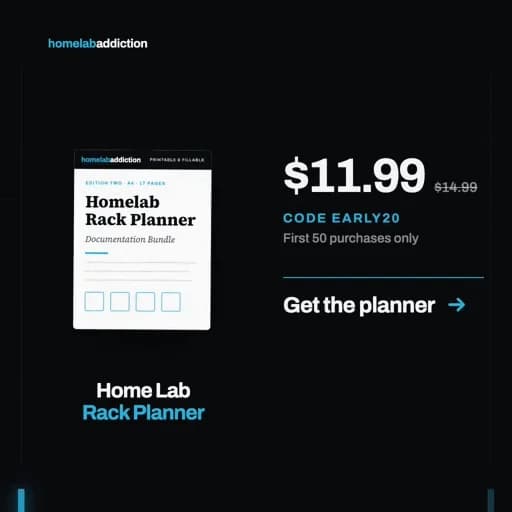
New in the store: If you are comparing mini PCs because this build is eventually going into a rack or shelf stack, the Home Lab Rack Planner helps you map node spacing, depth, power, and expansion room before checkout. It is $11.99 with code EARLY20 instead of $14.99, limited to the first 50 purchases.
| Product | Use Case | Price |
|---|
| Beelink SER8 | Best all-rounder — most homelabbers | ~$499 |
|---|---|---|
| Minisforum MS-01 | 10GbE powerhouse — advanced setups | ~$829 |
| Beelink EQ14 | Budget learning node | ~$189 |
transmission signupstatus: open channel
article_topic // Best Mini PC for Proxmox in 2026
Start building a smarter homelab.
Join readers learning Proxmox, networking, storage, backups, and self-hosting without breaking everything.
Enter your email address to receive the Homelab Addiction newsletter.
Beginner-friendly
No gatekeeping. Just clear, actionable guides.
1 useful email / week
Practical tips, real-world setups, and lessons learned.
Zero hype, practical only
What works, what breaks, and how to fix it.
Reply to any email with what you're building.
I read and reply to as many as I can.
— The Homelab Addiction Operator
support // the lab
Found this guide useful?
If it saved you time or a rebuild, you can support more practical homelab guides.